
Miami: (305) 536-9917
Phoenix: (602) 955-5248
Tucson: (520) 818-4302
Address: 511 NE 15th Street, Miami, FL 33132, USA

From solar panels and solar panel systems to generators, inverters, chargers and wind turbines, Sunelec.com is your source for affordable renewable energy.


THE CASE AGAINST PRIVATE UTILTIY INVOLVEMENT IN SOLAR INSTALATION PROGRAMS

In recent days we were going thru some old files and we found this article that was published in the December 77 issue of Solar Development Association newsletter. A newsletter funded by some friends of mine in Tucson, Tab Prizer and Tom Van Ravensway, when I was working for Congressman George E. Brown, Jr. It was written by The Union of Concerned Scientists, an organization of very prestigious scientists and concerned citizens (about 250,000 of them). It was begun at the Massachusetts Institute of Technology in 1966.

You can read it in full by clicking here (attachment coming tomorrow 8/23/10)

Here is a summary of what it said you may be surprised:

“During the past year, a growing number of the nation’s private utility companies have launched programs to install units in the homes of their residential customers. To date most of these programs have been undertaken either at the urging of state regulatory commissions or at the initiative of the individual utility. The utilities are the logical group to provide this service, it is argued, because of their access to the large sums of capitol needed to start and maintain such programs.


While there may be some merit in some of the “pro” arguments for such utility involvement in  solar projects, a full debate of the merits and demerits of such involvement has yet to occur. To date, there has been no public discussion of the “con” arguments. In the interest of fostering full public discussion of this issue the Energy Project of the Center for Science and the Public Interest in Washington D.C. has prepared an analysis of some of  the problems that will be encountered. A summary of the analysis follows:


Excessive Profit Taking:  Under proposed leasing schemes, the utilities would be  in a position to realize a substantial profit. They were allowed a 17% return on their investment for customer insulation programs. If this is allowed for solar it could make solar seem  less economically competitive (and possibly completely non-competitive) with nuclear and fossil fuels.

The report seems to imply that some utilities take solar incentives  (the tax payer’s money)  to help pay for it and then use the construction of that same system as an excuse to to get the state regulatory commission to increase  peoples utility rates and perhaps to gain favorable public opinion for having built it.

Monopolization/Favoritism: Utilities could swiftly monopolize the solar energy field and drive out the small solar industries from the business. By giving just a few companies the lion’s share of the business rather than spreading around their purchases, the utilities could effectively decide which solar companies will be allowed to continue in business.

Increased Costs to Consumers: Invariably , as the utilities move into the solar product fields, they will justify investments in this area warranting increases in administrative cost as well associated with program R & D.

Homeowners Would Pay Twice: In a case where the utilities sell and install systems they would receive the government subsidies. The result would be the homeowner paying doubly for the equipment/materials through taxation as well as paying to rent/purchase from the utility. (see comment above – Excessive Profit Taking)

Lack of Accountability:The utilities have an essentially captive market. The only way customers can effectively impact a utilities’ policies is through a rate hearing before a state regularly commission. However such proceeding are complicated, time consuming and very expensive making them unviable for most customers. Accountability is vital in any program that can have an effect upon their future energy decisions and directions.

Lack of Commitment to Solar by Utilities: Utilities themselves are maintaining the posture  that solar technologies will not play a a major role in the nation’s energy picture for years to come. They have expressed continued preference for not exhausting their nuclear and fossil fuel options before going solar.

Social/Political/Ethical/Considerations: Placing control of solar commercialization efforts in the hands of the utilities is to entrust the nation’s future to the same decision makers who have given us nuclear reactors, plutonium breeders,  polluting coal plants, coal gasification facilities, all electric homes, and inverted rate structures. Moreover, utility involvement in such programs (solar) will only be viewed by those companies in terms of how it will benefit them, regardless of whether decisions they make will have a negative impact on the balance of society. For example, in testimony before Congress utility officials outlined the reason they had for for entering the solar market. These reasons included 1. Providing a new business opportunity which would offset the inevitable reduction in utility sales and (2) Providing utilities with “access to capitol (federal [and state} grants, ) that would not (otherwise) be available.

Solar Technologies are Inherently Decentralized: The utilities owe their existence to a history based upon the development of large, expensive, and complex technologies. By comparison, though, solar technologies are simple, relatively low cost, and suited to dispersed, decentralized applications.

There are Alternatives: The primary argument of involving he nation’s utilities in solar programs has been that there is no viable alternative for the efficient commercialization of these technologies. There are other options. For example communities owning  municipal utilities a far more accessible to the public. Further they do not have a profit motive. A second option would for  the city governments themselves to establish community co-ops (with the assistance of federal seed monies) they could purchase large quantities of solar systems. These systems could then be sold to local residents at cost. Third option is to rely on the industries themselves that are manufacturing and distributing the solar systems to institute leasing programs. There is no need to add a middleman to the leasing scheme. A forth option would be to fund Community Action Programs so they can broaden their programs to include all residents of their programs, not just the low-income.

This is a Decision for the Legislature:  The involvement of the utilities solar programs could have ramifications for years to come. It is a decision that is is far too significant to be entrusted to the discretion of the individual utilities or to state regulatory commission or to any administrative agency (federal, state or local). Decisions regarding utilities in involvement in such programs are properly decisions to be made by state legislatures (and possibly the Congress) only after extensive and thorough public debate. It should also be part of a fuller effort to secure substantial reform of utility rate structures and decision making procedures.

End of Summary:

Comments: If these large expansive multi-megawatt systems  (solar utility plants, solar farms, various large scale commercial solar utility projects) covering massive amount of land were kept on the rooftops of our buildings where the solar generated electricity is to be used i.e. (homes and business) it would be not only be better but a ton more fun. 1. It would not destroy even more wildlife habitat, good farm land, etc.. 2. It would not require even more ugly looking massive and extensive power towers and cable crossing over the country to even more ugly transformer stations and then into the ugly telephone and power lines that visually pollute our neighborhoods and cities. 3. It would be more electrically efficient as it would reduce electrical loses coming from miles away. 4. It would provide 100 times more jobs, I suspect. 5. It would bring the cost of solar down because the  involvement by the people (people don’t even see or learn the first thing from these solar utility plants (they are usually in the middle of nowhere surrounded by barbed wire) until we get the rate hikes because of them). 5. It would simply our lives.” Solar systems are like tinker toys compared to power plants”. One utility power plant engineer told me one time. 6. It gives control of a vital part of our survival, electrical power, back to  those who depend on it.

Every time someone asks a question to a utility company about solar there is no one there to tell you how it works and it is so simple. Every home and every business is literally a solar school. The homeowners and most business owners are proud of their systems and would live to talk to you about them. We’ve been using it for 3 years (yes we had to make some adjustments, learning curve) but it is so simple (panels on the roof, wire comes down to inverter, inverter may or may not connect to a battery bank, inverter is connected to the Utility ) and its that way for every solar system in the country. It’s generally surrounded by enthusiasm and motivation. Go look at one. No moving parts, simple to design and install, and the panels and inverter are so tough that no one has lived long enough to know how long they will last in real time. Its all guaranteed for 25 years and well, what are we waiting for and why would you want to give this all away to the utility companies, I just don’t get all this grid-tied mentality. Sure grid tie it if you want to  but at least include a few batteries so you have basic necessities every day even if the power never comes on again for months or years. The only parts you have to replace are the batteries (they can last from 3 to 10 years depending how you maintain them)  and then you can enjoy electrical independence.

Look, thank god for the utility companies we obviously owe them a huge debt of gratitude. I also believe it when FPL says that we have some of the lowest rates in the nation. That’s great.

But I worry about nuclear power because of my son. It’s more about the nuclear waste than the plant.

This is an old report,  1977 but it still has significant arguments in it valid today.

We are also  trying to make arguments for solar to make money, there’s nothing wrong or illegal with that. our sales pay the bills just like a utility company so we you can understand.

Solar hybrid (mix it with natural gas, utility back up, generators, even), it seems the more you can afford without getting too complicated along with reducing the electric power you use is the best way to make your own electrical system cost effective and you electrically independent.

Thank you.

John

Boots On The Roof


We are conducting a survey of the solar seminars now being heavily promoted on the internet.

If you have information on the Boots on the Roof seminar and would like to share it we would be very interested in hearing about your opinion of it, or any other solar training or educational program for that matter.

Thank you.


John

Scam Artists Arriving For Solar Training Seminars


Paid $2,000 went to the Training program walked out after 30 min. Went to an SMA Training Program went to the Instructor related the story. Told them how great SMA’s training program was.

Just look at the internet they are everywhere. Anyone can rent a meeting room. Recently there were 10 awards of DOE stimulus money of $3,000,000 each to set up training programs to train installers. That’s enough to build a few entire grade schools, I think. Some of these Training programs are in States that don’t even have solar incentives, like they need installers? Fla. is one.

Looking at my email I see them everywhere. It’s easy to describe one in the ad copy it’s harder to know what your really talking about. Incompetent people taking in hundreds even thousands of dollars from people giving seminars.

Buyer beware of bait and bullshit . Go to www.sei.org and  www.SMA.com or www.FSEC.org  for the best and most reliable and the oldest training programs in the U.S. SEI and FSEC have the best Installer’s manual around.

Our seminars are free, we think the opportunity to sell to people who attend is enough. We use the SEI Installers Manual and our own Design Guide and Catalog. You can have the Catalog and Design guide and if you want to purchase the other one we sell them at our cost $35 instead of there retail $59.95.

Sun Drying Up

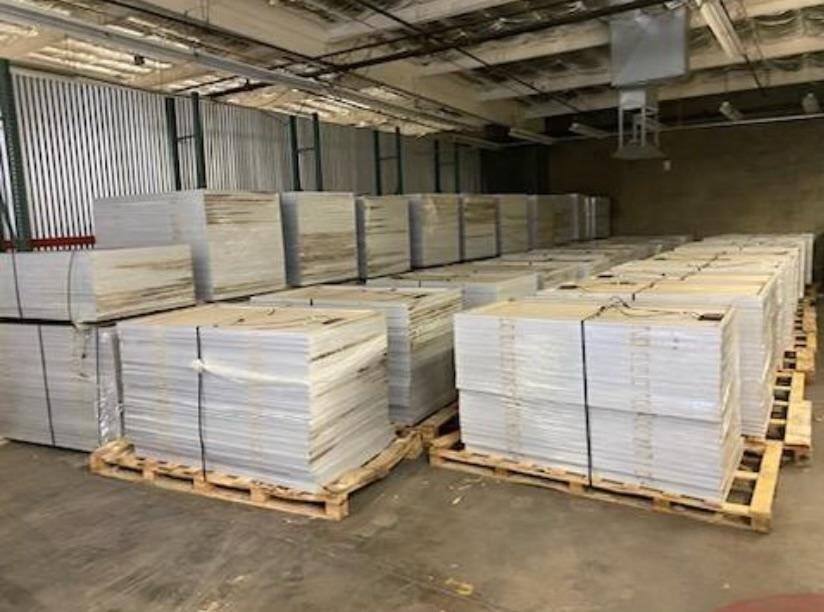
As the world turns towards the SUN supplies of solar modules and solar cells shrink. Click the Inventory on the home page and see who’s got what. While some orders are cancelled most stick. It’s really surprising how many normally major suppliers have zip for the rest of the year.

It’s a solar seller’s market. If you want to purchase pallets or more be prepared to prepay or put down a down payment of 10 to 30% to protect your P.O.

Prices are going up as supply goes down, modules in high demand like 230 watts have gone up from $.05 to $.20/W. The rest of the market has increased by about $.05 to $.10/W.

Inventory controls everything. Even if you have the price, specification and organization you want if you don’t have inventory you have nothing.

We just returned from a Trip to China, Intersolar Europe, Intersolar North America the whole deal is the fault of Germany and continued growing demand in a dozen other countries.

Some say things will be better after Oct, others say it will continue all the way into the 4th Quarter of next year. No one knows for sure except that the demand and the interest in solar over the long run will probably always increase unless  some other energy solution  comes along. It always has been a steadily rising curve . Today it just goes straight up going faster and faster like a space Shuttle Launch.

Hopefully it will break free of the earths demand for filthy fossil fuels and nuclear power, natural gas seems very cool however, clean and efficient and abundant just the way we need it .

John

Germany installed more solar than the U.s.

in the first quarter than the U.S. did all year. Italy will install the same amount of solar this year as the U.S.

Well only one guy sent in photo’s, He wins all 36 solar cars if no one else sends in photos with a caption by July 4th.

U.S. Japan and Italy demand will double in 2012, shortage coming?

Note: 1MW is about 10 40 ft. containers. 1 GW is about 100German tariff rules in Germany are going to reduce it but not enough to curb Germany’s huge demand. Industry leaders are saying demand there will only decrease by a little more than .05 GW. from about 46 GW/yr. now. Germany is 10 times larger than they U.S. in installations and get’s less than half the solar energy.

The U.S. could grow from 900 MW/yr. to 1.7 GW next year because of incentives.

Japan is expected to increase from 900 MW to 1.7 GW next year also because of new incentives.

Italy is expected to grow to 1 GW next year (don’t know what they were this year) because of incentives.

There are a lot of other countries with incentives such as Canada’s (Ontario) which is amazing, China is turning into a solar subsidized cannibal as its massive subsidized demand begins to zero in on their Government run and subsidized production facilities.

Interestingly the lack of small items like MC 4 cables is paralyzing the industry in Germany. Just because you can get modules doesn’t help if there aren’t cables to interconnect them, 0 stock 0!. SMA inverters, the world most popular and maybe largest manufacturer told everyone at Intersolar in Germany that all  sizes are unavailable in Europe as well until further notice. 0 stock 0! The backlog is unprecedented.

If you can get modules even similar to what you want and all the other equipment buy it before it’s too late. Don’t be stubborn and demand 230 watts when you can get 210 or a mix of 205’s and 210’s instead of all 210’s it’s just electricity and if you engineer it right the difference is negligible. You can even use different brands.

If you can find what you want here might be delays for order delivery during the summer but come September and October there’s a fairly strong chance, lead times will be 6 months. For the majority of major brands of Modules it’s already happened.

Bet you didn’t know our “catalog” at the top of the home page has over 5000 RE products and wholesale prices for any quantity. Click it and see!

It’s a lot more than what we list on our web site. Our Home page is just our best deals including pallet, container and megawatt modules. This gives you wholesale with quantity break discount pricing for everything from nuts and to all the modules we don’t stock but can get just like all those other guys advertise, that say “in stock and ready to ship” but that aren’t and they can’t. (enough said about that). Anyone can do that.

The printed version of the catalog that also includes the Renewable Energy System Design Guide says $15 on the cover. We just wanted you to know if we send you them for free, what their worth (add the shipping their 200 pages). If you ask nicely we will probably send you one for free.

We have extras for Schools, Hospitals, Clinics, Non Profit and  Environmental Groups, Disaster Preparedness, Missionaries, Disaster Relief, Emergency Shelters, Boaters, Governmental Agencies, Friends of ours, Seniors, Students, Engineers, Architects, and just in case anyone who wants to pay for one.

The faster we sell the uni-solar modules for $.98/w the faster we can get more.

So far it seems our supply is unlimited of these UL listed flexible peel and stick to your roof theft proof modules. No the factory is not going out of business, no they are not blemished, yes they are UL listed, Yes they have a factory warranty of 20 years, then why are they ridiculously inexpensive because we make you buy a whole system to get them at this price, that’s why.

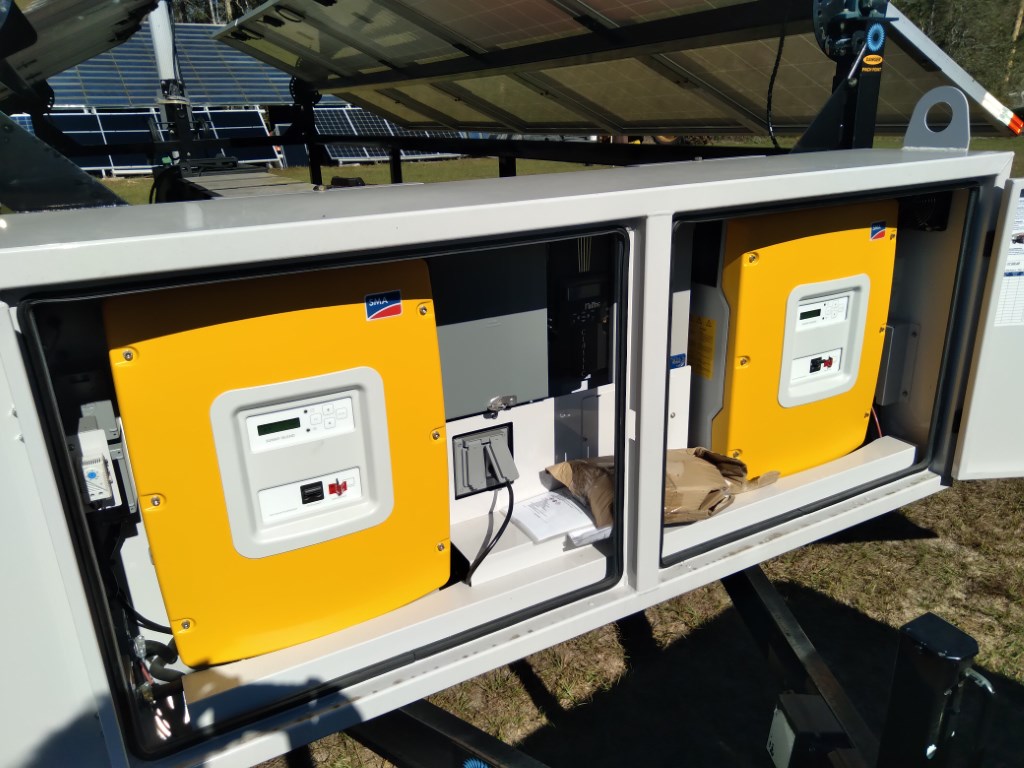
No we don’t change the prices (raise them) on the SMA inverter, or any of our normal lowest balance of system (BOS) equipment. All that stays the same and on some we pay the shipping because they are so light.

Yes we do get the benefit from having them as a loss leader. Nothing like advertising solar panels at below $1/watt to get attention. You can buy the panels at $1.20/watt by themselves too.

Yes it’s a little crazy but so is this whole solar grid tie idea paid for by our tax dollars. If someone else has to pay for it to make it happen it should be paid for by the oil companies, coal companies, utility companies and a little by the arms suppliers to the world seems appropriate too, hey might as well throw in the unions (at least from my encounters, at trade shows), and anyone in government that makes more than $300,000 a year and oh yeah Wall Street and others who we had to bail out like the Banks, convicted drug dealers (and any other ideas out there) as well.

5 day, – 5%, 5 Pallets sale extended to this Friday

See web site for details at top of home page.